Official data ·
Does more education mean less unemployment in the Dominican Republic? Partly: 4.396 % with university in 2025, 6.505 % with secondary school, above the 5.171 % with primary or less
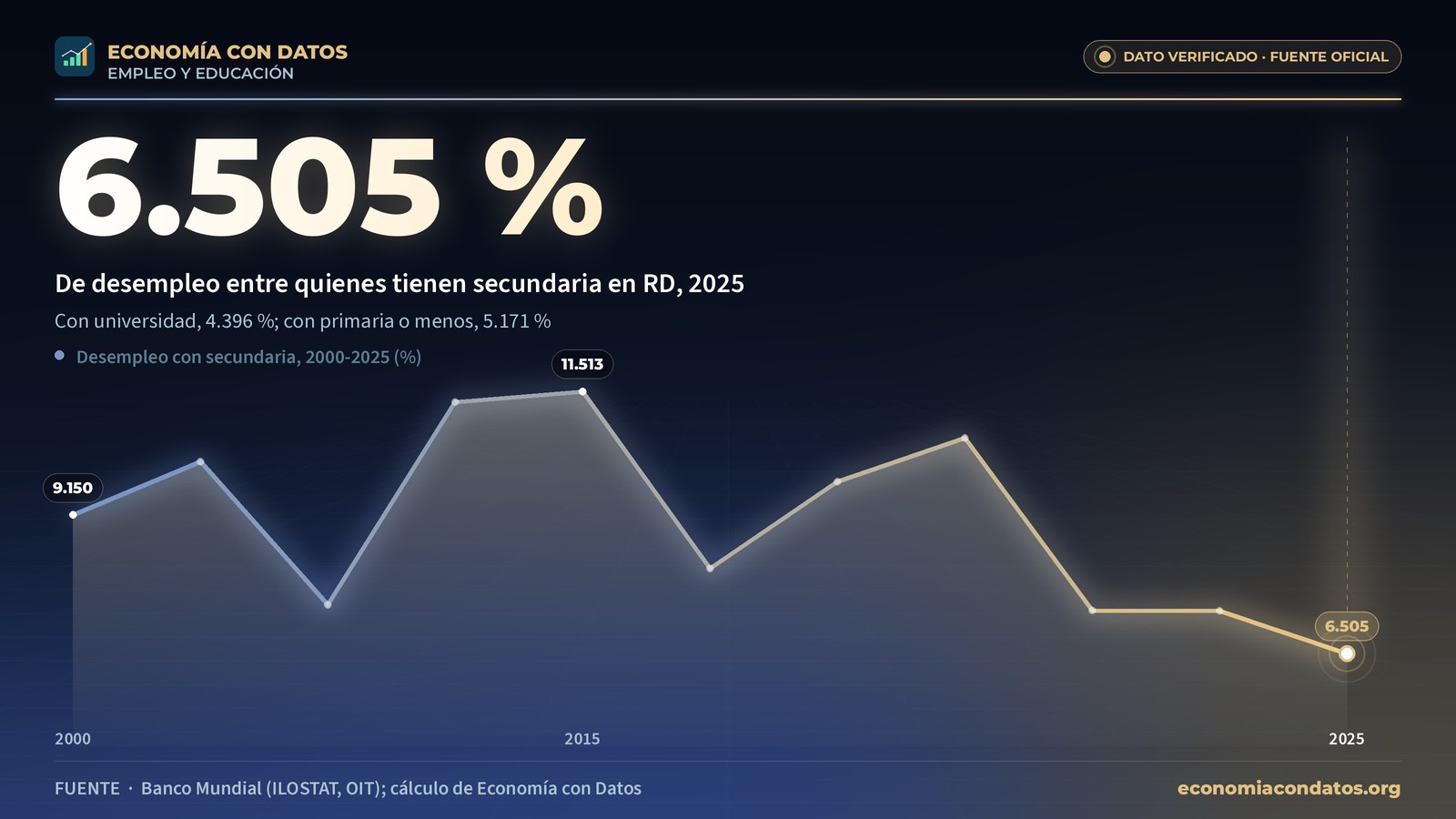
According to World Bank data (ILO ILOSTAT database), unemployment in the Dominican Republic in 2025 was 4.396 % among people with advanced (tertiary) education, 5.171 % with basic education and 6.505 % with intermediate (secondary) education. Secondary had the highest rate in all 26 years from 2000 to 2025. Comparisons and calculations by Economía con Datos.
On Sundays, Economía con Datos tests a common claim against official figures. Today: «the more you study, the less likely you are to be unemployed». We used the World Bank's unemployment by education level series (World Development Indicators, based on the International Labour Organization's ILOSTAT database and the country's labor force surveys), 2000-2025. Basic education is primary or less; intermediate, secondary; advanced, tertiary. These harmonized estimates may differ from the official figures of the Central Bank of the Dominican Republic (BCRD).
What the data show
In 2025 unemployment was 4.396 % among people with advanced education, 5.171 % with basic education and 6.505 % with intermediate education: the secondary rate was 1.334 percentage points above the primary-or-less rate and 1.48 times the university rate. From 2024, it fell for secondary (from 7.316 %) and rose for the other two levels (from 3.475 % for advanced and 4.575 % for basic).
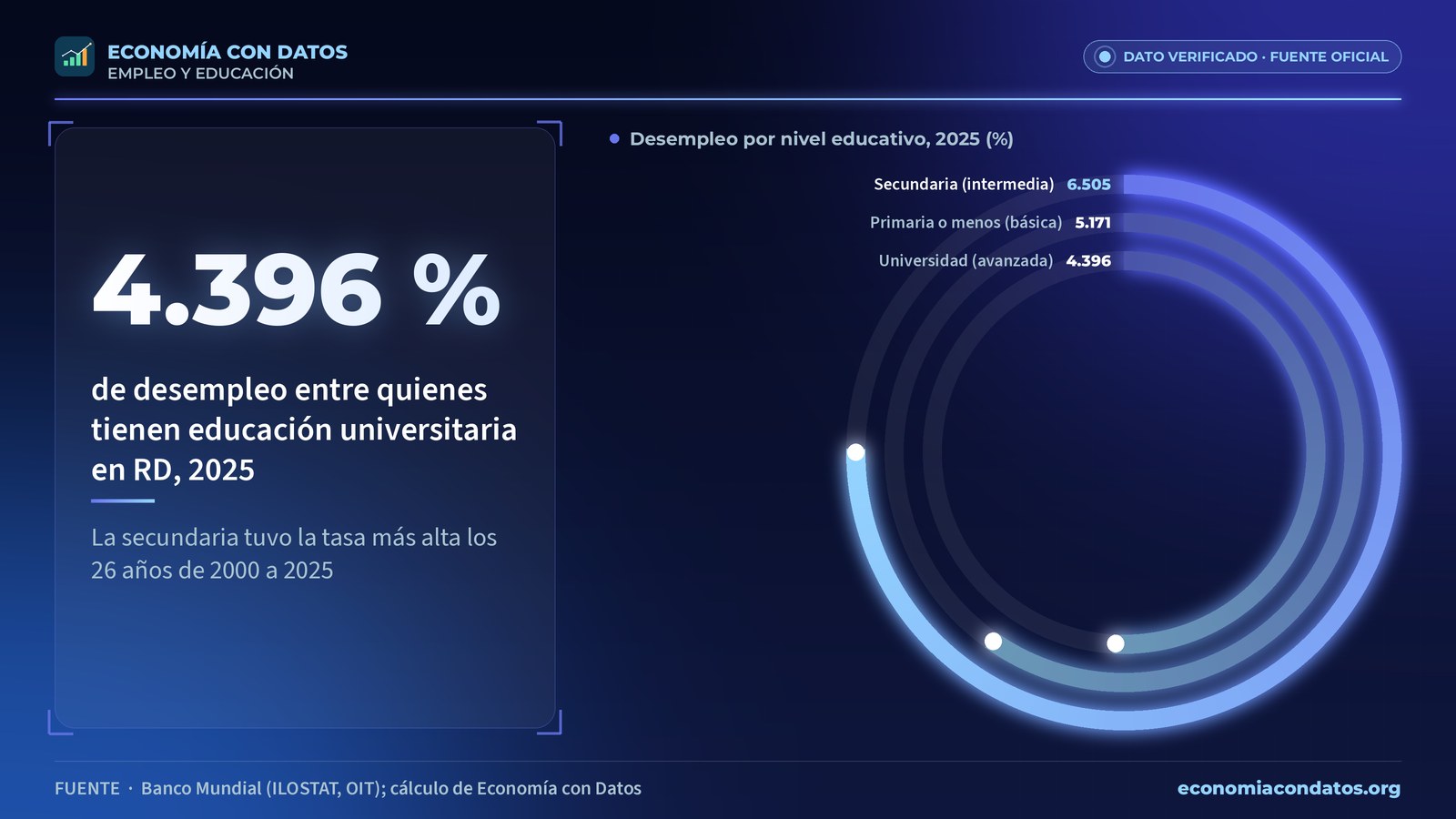
Intermediate education had the highest unemployment rate of the three levels in all 26 years from 2000 to 2025. Advanced education had the lowest in 20 of those years and basic education in the other 6 (2017 and 2019-2023). The 2025 secondary rate of 6.505 % is the lowest since 2000; the peak was 11.513 % in 2015. Point differences, ratios, averages and year counts are calculations by Economía con Datos.
What does this mean?
The claim holds only in part: a university degree went with the lowest unemployment in most years, but finishing secondary school did not go with lower unemployment than primary or less. The rate only shows whether people have a job, not how much they earn or whether the job is formal.
Source: Banco Mundial, Indicadores del Desarrollo Mundial (base ILOSTAT de la OIT): desempleo por nivel educativo (document in Spanish).
This is an English summary by Economía con Datos. Read the full article in Spanish.
Get Dominican economic data on WhatsApp: follow our channel (in Spanish)